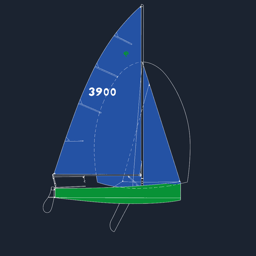
 Thistlebase
A humorous feud between boat owners over naming conventions. Erwin McGuire's choice of HEATHER for his No. 213 prompts Bob Clements to suggest KOPY KAT, leading McGuire to respond with jabs about Clements' age and boat condition. The editor notes this rivalry will likely continue at the 1948 Nationals as "The Battle of the Feathers."
Boat Setup, Rigging & Hardware
Nationals Boat & Gear Surveys
Technical surveys and roundtable analyses of the boats, equipment, and rigging that performed best at Nationals.
92 articles · 1946–2026
The editor discusses the proposed burgee design by Ron Small and upcoming publication schedule. Details are provided on quota determination for the 1951 Nationals based on registered boats per district, and a call is made for fleet stories and photographs to include in the upcoming Year Book.
This comprehensive article by Chief Measurer Dave Minion examines boat weights from the 1961 National Championships at Racine. Using the same scale as prior races, detailed weight data reveals the lightest boat at 491 pounds and the heaviest at 562 pounds. The analysis demonstrates minimal advantage for lighter boats and discusses the implications for fleet competitiveness.
Chief Measurer Dave Minton reports on the weight data from the 1961 National Championships at Racine. All competing boats were weighed and compared, revealing the scale calibration was 7 pounds low at the lightest and 11 pounds low at the heaviest. The data shows weight distribution across the fleet and discusses implications for future championships.
Correspondence between Chief Measurer George Devlin and Pete Bordes, owner of boat 603 (the heaviest boat at the 1960 Nationals), discussing boat weight and its relationship to performance. Pete argues that weight doesn't determine speed and that other design factors are more important.
Continuation of racing instructions covering skippers' briefing, crew requirements, division assignments, recording of protests, and measurement specifications for boat components.
Article featuring the top five skippers at the National Championship discussing their sail configurations. Ed Walsh, Jack Wanenmacher, Denny Posey, and others describe their mainsail, jib, and spinnaker choices and the conditions under which they use them.
A comprehensive article by National Champion Ed Walsh analyzing the sails used at the National Championship, discussing design philosophy, construction materials, and performance characteristics of various sail configurations including discussion of jib materials and mainsail specifications.
Account of Jim Phelps' sailing achievement with his boat HARD-ALEE in a successful series at the Whale of a Sail regatta at the Allom pool of the Mississippi River.
Notification of significant changes to sailing rules for the 1965 National Championships, directing sailors to review updated racing regulations.
A comprehensive analysis of questionnaire data gathered from 65 boats at the 1965 Thistle Nationals, examining hull construction materials, mast materials, centerboard types, rudder characteristics, and other design variables to understand which features correlate with competitive performance and boat speed.
Results of a questionnaire conducted among boats competing in the 1965 Nationals at Milford. Presents data on boat construction materials, mast types, centerboard shapes, rudder configurations, and hull characteristics. Analyzes whether wooden or fiberglass hulls, and various equipment choices, correlate with racing performance or boat weight.
Technical analysis of sail usage at the 1965 National Championships at Milford, examining whether certain sail characteristics like jib yarns and foot slipper correlate with racing performance. Includes data tables showing fleet standings and sail measurements.
Comprehensive analysis of sails used at the 1965 National Championships, presenting questionnaire results from boat builders showing data on jib yarns, foot slippers, and other sail characteristics used by top competitors.
Analysis of hull construction and equipment choices from the 1965 National Championship fleet, with questionnaire results comparing wooden vs. fiberglass boats and various rigging configurations.
Comprehensive questionnaire-based analysis of boat characteristics at the 1965 Nationals comparing wood versus fiberglass hulls, mast types, centerboard materials, and performance factors. Includes statistical tables and analysis of crew weight, hull weight, and finishing positions.
First-person narrative by Peter Barrett detailing the preparation and racing experiences of his boat "True Love" at the 1967 Mid-Winter Championship. Covers boat modifications, crew selection, racing incidents, and strategic decisions throughout the competition.
Statistical analysis comparing boat characteristics between wood and fiberglass hulls at the 1967 Nationals, examining hull construction, mast materials, centerboard types, outhauls, travelers, hull weight, and crew weight. Results show growing preference for fiberglass boats with glass-board centerboards.
Detailed statistical analysis comparing Thistle hull construction types and rigging over several years. Surveys boat characteristics like hull material, centerboard type, outhaul systems, and weight measurements to identify trends in competitive boat design.
Scatter plot chart displaying the relationship between crew weight and finishing position at the 1967 Nationals, showing weight ranges from approximately 400 to 575 pounds across all finish positions.
Scatter plot chart showing hull weight distribution across finishing positions at the 1967 Nationals, with symbols indicating wood hulls (circles) versus glass hulls (X marks), ranging from approximately 500 to 570 pounds.
The editor discusses the analysis of questionnaires from the 1968 Nationals, highlighting the statistical findings about boat equipment, design trends, and performance factors. The issue emphasizes the importance of properly interpreting data and notes that correlation between factors doesn't necessarily prove causation.
A comprehensive statistical analysis of boat characteristics at the 1968 Nationals, examining hull construction (wood vs. fiberglass), mast materials, rigging configurations, weight distribution, and performance metrics. Includes detailed comparison tables and charts showing relationships between equipment choices and finish positions.
Statistical analysis of the 1968 National Championships examining boat construction characteristics, hull materials, mast construction, weights, and performance data. Includes comparative tables of wooden versus fiberglass boats, weight statistics by finish position, and technical trends in Thistle boat design.
Complete technical data table showing mast characteristics for boats competing in the 1968 National Championships, including material, deflection measurements, weight, and center of gravity calculations.
Guide to chartering a Thistle sailboat at the 1969 Nationals, addressing common questions about the process and providing practical information for those interested in sailing in the championship without owning a boat.
Practical information about the charter boat program at the Nationals, explaining how boats are assigned, what equipment is included, and what requirements apply to chartered boats.
An analysis of the winning boats at the 1969 Nationals, examining design features that contributed to their success. Includes detailed statistics on hull materials, mast types, centerboards, and rigging choices, with commentary on boat selection criteria and competitive advantages.
Analysis of winning boats at the 1969 Nationals, examining what made them successful. Discusses how boats are equally competitive but sailors, equipment, and rigging affect performance. Provides insights into boat selection and class characteristics.
Analysis of 1969 Nationals performance by experienced sailors discussing equipment choices, particularly sails used by top skippers, and considerations for purchasing competitive sails.
Comprehensive tabulation of sail equipment used by top finishers in the 1969 Nationals, organized by sail type (Main No. 1, Main No. 2, Jib No. 1, Jib No. 2, Spinnaker) with sailmaker and construction details.
Discussion among top skippers analyzing data from 1969 Nationals competition regarding sails, equipment choices, and their correlation with winning performance. Focuses on sails and sailmaker preferences.
Comprehensive race results tables from the 1969 National Championship organized by jib number and spinnaker type, showing sailmaker choices and equipment specifications used by competing boats.
Comprehensive analysis of the top Nationals boats from 1970, examining boat construction, sail controls, crews, and the factors that make certain Thistles competitive. Includes detailed specifications and performance data.
An analysis of boats, gear, and rigging innovations observed at the 1971 Nationals, examining changes in sails, spinnakers, mains, and equipment used by top competitors, with insights from experts on what made the difference in performance.
Comprehensive technical tables compiled by Rod Clouse documenting the equipment specifications of the top boats from the 1971 National Championship, including hull material, mast type, sail control systems, sails used, and crew weights.
The 1972 National Champion explains boat balance theory and practice, using detailed diagrams of the hull and sail plan to show how adjusting the centerboard and leech tension affects weather helm, heel, and overall speed in various wind conditions.
Technical analysis of the rigging and hardware innovations found on the top finishing boats at the 1972 Nationals, featuring detailed photographs and commentary on equipment setups.
Technical analysis of the top six boats that won the 1972 National Championship, examining their rigging innovations, centerboard setups, jib systems, and other design features that contributed to their competitive success.
An examination of innovations in boat construction seen at the 1972 Nationals, including new mast designs, rigging features, and hardware developments that represent advancements in Thistle boat building and design.
Statistical tables documenting the specifications of boats in the top rankings, including hull builders, sail control methods, equipment configurations, sails, and weight information. This data was collected from the National Championship competitors to provide insight into boat tuning preferences among the fastest sailors.
Technical note regarding measurement and weighing procedures for 1974 Nationals to ensure all boats meet PFD (Personal Flotation Device) requirements for racing.
Comprehensive information for competitors preparing for the 1974 National Championship including chartering requirements, technical specifications for mast and boom components, aluminum boom specifications, rules measurements, and contact information for race administration.
Comprehensive survey of the 1974 Nationals held in San Diego analyzing boat and crew weights, sails, masts, equipment, and boat builders. Detailed statistics and insights into the sixty-eight boats that competed, confirming the Thistle as a true one-design class.
A comprehensive technical analysis of the 1974 Nationals held in San Diego, examining crew weights, boat weights, boat builders, sails, masts, and equipment specifications across the Championship and Presidents divisions. The survey documents the diversity of equipment choices and performance data from 68 competing boats.
Tom Dykstra's firsthand account of his 1974 National Championship victory, detailing his sailing techniques, crew management, jibing philosophy, and reflections on the competition and sailing at South San Diego Bay.
Analysis of recent Nationals sailing records, examining which boats used Van Zandt sails versus other manufacturers and providing recommendations for sail configuration and technology choices.
A comprehensive analysis of the top ten boats at the 1975 Nationals, examining their equipment, rigging, sails, crew weights, and design innovations. The article includes detailed equipment tables comparing specifications across different winning boats and discusses the evolution of Thistle design and construction methods.
A detailed examination of the top ten boats that competed at the 1975 Nationals, analyzing hull construction materials, sail choices, equipment, and rigging systems. The article reveals that new builders like GMW and Douglas & McLeod were competitive, and documents the specifications of winning boats including mast, boom, centerboard, rudder, and sail equipment choices.
Analysis of crew weights at the 1975 Nationals showing crew expectations were lighter than anticipated. The average crew weight of 466 pounds was less than it had been for many years (1968-1981 range), indicating competitive advantage for lighter crews, and skippers accounted for the majority of forward crew weight.
Continuation of detailed analysis of top Nationals boats covering crew position dominance, consensus boat specifications, and equipment considerations for competitive sailing.
Comprehensive analysis of the top ten boats from the 1976 National Championship Regatta examining boat specifications, equipment innovations, sail designs, crew weights, and competitive trends in the Thistle Class.
Comprehensive technical analysis of the top ten boats from the 1976 National Championship. Includes detailed information about boat construction, equipment, rigging, sails, crew weights, and performance characteristics.
Promotional content describing the Performance Program with sails and components from the 1977 TCA Nationals, emphasizing quality and availability.
A comprehensive technical analysis of the top ten boats at the 1977 National Championship, examining hull designs, construction methods, equipment specifications, and performance characteristics of successful Thistle boats.
A technical overview of the boats that competed at the 1978 Nationals, discussing hull and centerboard variations, rig characteristics, sail controls, and crew weights.
Detailed technical analysis of boats at the 1978 Nationals covering hull materials, boards, rudders, rigging, sails, and crews. Discusses construction materials, design innovations, and crew performance trends from the championship.
Analysis of the boats that competed at the 1981 Nationals, examining boat specifications, rigging configurations, sail choices, and performance characteristics. Notes that boat weight has become lighter over recent years and that #603 won the Nationals with #1 finishing tenth.
Comprehensive technical specifications from the 1981 Nationals including hull/centerboard measurements, rigging configurations, sail specifications, and crew weights for the top finishers.
Finefrock reports on the successful 1987 Nationals with 107 boats, the largest fleet ever. He highlights the diverse geographic participation from 22 states, encouraging continued growth through fleet support and regional regattas.
Comprehensive technical data table for the top ten boats at the 1987 Thistle Nationals, including hull and centerboard specifications, rigging dimensions, sail information, and crew weight/distribution data.
Advertisement for North Sails East featuring new North Cross Cut Spinnaker design for 1988 season, with promotional information.
Comprehensive technical and crew data for the top ten skippers at the 1989 Nationals, including hull and centerboard specifications, rigging details, sails, and crew weights and relationships.
A roundtable discussion featuring the top ten skippers from the 1989 Nationals sharing their insights on boat setup, crew selection, starting strategy, teamwork, and tactical approaches that contributed to their championship success.
Top finishers from the 1991 TCA Nationals share their strategies and insights on boat setup, crew selection, racing tactics, and preparation methods. Covers topics including crew weight management, sail selection, boat speed optimization, and mental preparation for competitive racing.
A comprehensive Q&A with the top ten finishing boats from the 1993 National Championship at Oak Harbor, covering boat setup, tactical changes, current effects, and sailing techniques. Includes detailed tables of hull and centerboard data, rig data, sail data, and crew data for each top finisher.
Editor discusses the 1994 Nationals at Cedar Point and reflections on the event. Thanks various organizers and notes the tragic death of Larry Klein and implications for sailboat racing safety.
Photo essay from the 1994 TCA Nationals at Cedar Point Yacht Club featuring attendees, events, and memorable moments from the celebration.
Results from the 1995 Nationals sailing championship showing top finishers in the Championship Division and Presidents Division, with 128 boats attending the 50th celebration regatta and 186 at the 50th Celebration.
Technical analysis of boats that competed at the 1994 TCA Nationals, with details about rigging innovations and system modifications used by top finishers.
Q&A feature with questions about boat setup, weather tactics, and lessons learned from the 1994 Nationals, answered by top finishers including Dave Dellenbaugh and other winners.
Comprehensive technical data table on the top 10 finishers from the 1994 Nationals, including hull specifications, rigging data, sail data, and crew data.
Q&A session featuring sailors discussing boat tuning, preparation for racing conditions, and tactical decisions made at the 1995 Nationals. Multiple sailors share their experiences with rig tuning, boat setup, and race strategies.
Detailed technical tables showing specifications for competitive boats sailed at the 1995 Nationals, including hull materials, weights, rig data, crew data, and sail specifications.
A comprehensive Q&A roundtable with nine top Nationals competitors discussing their preparation, racing strategy, boat setup, mental approach, and performance at the 1996 Nationals regatta.
Joe Burcar presents a proposal for team racing at the 1997 National Championships in San Diego. The plan includes format details, elimination procedures, endorsements from notable sailors, and contact information for those interested in participating.
A roundtable discussion with top-ten Nationals finishers covering team selection, including questions about how skippers assembled their crews and what they look for in crew selection. Contributors discuss the importance of team dynamics, experience, and having compatible sailing partners.
An in-depth interview-style article with top Nationals competitors about sailing techniques and strategies used during the championship. Topics include boat setup, trim techniques, wave handling, wind reading, and tactical approaches that contributed to their success.
Comprehensive statistical analysis of hull and boat specifications, rigging data, crew composition, and sail equipment used by top Nationals competitors. Tables document skipper/hull numbers, hull materials, weights, rigging configurations, crew demographics, and sail preferences.
Comprehensive survey of the top 10 finishers from the 1999 Nationals at Edenton, North Carolina. Includes detailed interviews with each skipper about crew experience, boat setup, wind strategy, crew weight considerations, and secrets to success. Also includes technical specification tables for hulls, rigging, crew weights, and sails.
An extensive Q&A with the top ten finishers from the 2000 Nationals at Sayville, covering their approach to sail selection, crew training, tuning for heavy air and chop, upwind strategy, downwind speed, and tactical insights. The discussion reveals how top competitors adapted to the challenging moderate-to-heavy air conditions.
Historical anecdote from the 1950s Nationals in Connecticut about champion sailor Sandy Douglass who received new sails from sailmaker Howard Boston that unexpectedly performed poorly, causing him to trail in the fleet. Douglass returned to his old sails and returned to winning form.
Christiansen describes how he modified his boat to accommodate his young son Peter as crew for the 2002 Nationals. The article details custom modifications including removable pole-reaching steps, a lighter carbon pole, specialized tweaker systems, and practical strategies for keeping a 9-year-old engaged and safe during racing. It demonstrates how family-oriented boat modifications can introduce children to competitive sailing.
Two contrasting perspectives from top Nationals finishers Mike Ingham (first place) and Bruce King (second place) on boat speed, upwind tactics, and race strategy. Ingham emphasizes the big picture while King provides detailed tactical analysis.
Comprehensive survey of the 2006 Nationals top 10 finishers where all 10 responded with detailed answers about crew selection, preparation, boat rigging, tuning guide compliance, racing conditions, tactical approaches, and memorable moments from the championship.
The 2007 National Championship in Eugene, Oregon is being planned to match the quality of the 2002 event, with the same race committee, expected perfect weather, and comprehensive pre-race requirements for sails, measurements, and safety equipment. The article outlines the regatta venue benefits and provides guidance on boat preparation and weight requirements.
Compiled interviews with the top 10 finishers from the 2008 Pensacola Nationals where they explain crew selection, practice methods, pre-race preparation, starting strategy, tactical decisions, and lessons learned. Includes detailed technical information about boat setups and tuning.
Detailed specifications and settings for the top ten boats competing in the 2010 Nationals, including information on skippers, crew, boat weights, sail configurations, mast settings, and racing notes from competitors.
A detailed technical table showing the specifications of the top ten boats from the 2010 National Championship, including hull type, weight, rig details, and comments from skippers about tuning and technique.
Mid-fleet sailor Dan Russell describes how the decision to race as one fleet at Nationals, instead of splitting into two divisions, proved beneficial for his team. He details the specific improvements made through the week, including boat speed optimization, mark rounding tactics, wind reading, and advice from top sailors, culminating in a top 30 finish.
Humorous account of Mike Ingham's boat catching fire at Nationals when he burned the ends of his newly-installed jibe line to stop fraying. The fire spread to the hiking strap padding and nearly destroyed the boat and main sail. Ingham's boat was subsequently nicknamed with several fire-related monikers throughout the regatta.
Mike Ingham provides a detailed tactical analysis of big fleet racing strategy at Nationals, illustrating key concepts through his team's Race 4 experience where they recovered from 50th place to 8th using systematic compromises and decision-making rather than risky gambles.