 Thistlebase
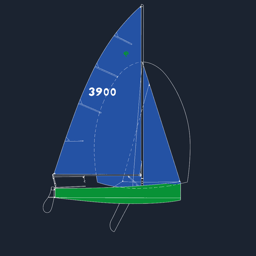
Sandy Douglass's Thistle No. 1, "Fausel," was featured in color films shown at LeatherLips Yacht Club, demonstrating superior light-air sailing technique. The film was taken at the 1946 Buckeye Lake regatta organized by the Ohio Inter-Club Yachting Association.
Thistle History, Design & People
Thistle History & Design Origins
Articles chronicling the Thistle's origins, design philosophy, and evolution as a one-design racing sailboat.
89 articles · 1946–2026
Sandy Douglass recounts the imaginative genesis of his first Thistle sail, beginning as speculation while sailing International 14s about a larger, faster boat combining the best features of the class. After years of conceptualizing, drawing, and building, he launched his boat on Lake Erie to test whether it matched his original vision.
Thistle No. 181 has been sold by boat builder Ralph Wiley to Colonel Winthrop W. Harrington of Gibson Island, Maryland. Harrington is well-known as Board Chairman of the Marmon-Harrington Company and a former President of the Society of Automotive Engineers, bringing his engineering expertise to sailing.
Gordon Douglass reports positive reception for Thistle sailboats at the New York Boat Show, with visitors impressed by the design and seaworthiness. The Fox River Boat Works likewise had success at the Chicago Boat Show and plans a regional touring campaign to increase interest in racing and fleet organization.
Brief note about Henry Cowgill taking delivery of a Thistle boat that was originally ordered in 1946 but delayed due to wartime constraints, with plans to sail at Buckeye Lake.
A brief note requesting news about Ray McLeod's efforts to solve a problem with keeping plaid material on his boat from fraying.
Notification that the July issue of Yachting magazine featured a Thistle article by Ralph Wiley and a cover painting by "Sody" Soderberg. The article discusses the Thistle's design and sailing qualities, with a brief commentary on spinnaker usage.
Dick Brainard (BR'ER FOX No. 545) inspired by a Star Class No. 1 yacht displayed at Manhasset Yacht Club, proposes to enshrine the original Thistle No. 1 in his backyard as a historical monument to the class, offering to preserve this pioneering vessel.
The Bagpipe features the New York Boat Show at Grand Central Palace as its January theme. The article describes the show as a major attraction for yachtsmen, with the Thistle class making a strong presence through Sandy and Ray's display and loyal class members helping manage the boat booth. The show represents an important opportunity for converting new sailors to Thistles.
Douglass explains the functional design philosophy behind the Thistle's distinctive appearance, addressing criticism about its unconventional look. He covers design choices including the plumb bow, lack of decking, and round-bilge hull construction, arguing that each feature serves a practical purpose and results in superior sailing performance.
A brief notice that the March issue of RUDDER magazine will feature an article on the THISTLE class as part of a new series on One-Design classes called "One-Design [O SAE BONNIE (505)]" written by a National THISTLE Publicity Chairman Les Heyer.
A letter to the editor from an older Thistle sailor arguing that sailing has become overly complicated with unnecessary gear and chrome plating, and advocating for a return to simpler racing practices.
Column discussing the proliferation of boats named "THISTLE" and suggesting an official registry to avoid confusion and duplication. Highlights creative naming examples and encourages skippers to work with the Association Secretary on unique boat names.
The main editorial addresses the Thistle class's publicity efforts and responds to criticism about Thistle performance. It discusses the importance of maintaining good publicity materials and corrects misconceptions about the class's competitive ability compared to other designs like Lightnings and Comets.
Ray Felbusch of Fleet 50 reports that the Thistle has proven to be an excellent training boat for Red Cross sailing classes at the Miramar Yacht Club. The boat's capability and its media presence are highlighted.
A photograph of Thistles moored at Watkins Lake shows an amusing docking situation where the boats appear to have painted themselves into a corner with limited access for departure.
An informational piece explaining the origins and meanings of various Thistle boat names from Mentor Harbor Fleet 8. The article traces how boat names like 'THISTLE', 'Duncruin', 'Burma Shave' and others were chosen, often reflecting Scottish heritage, historical significance, or playful references. The author speculates on the motivations behind name choices and their connection to Thistle Class traditions.
A biographical feature on Gordon K. 'Sandy' Douglass, designer of the Thistle class and prominent sailor. Douglass is a native of New Jersey and New York with a distinguished sailing heritage spanning from 1838. He has won multiple championships in canoe sailing, designed several boat classes including the Thistle and Highlander, and is an accomplished portrait painter and barbershop quartet singer.
Photo and story of the first Thistle built in England by Medina Yacht Company, being exhibited at the Motor Boat Show in New York. The article discusses the controversial three-ply hull construction and invites readers to spot a rigging omission.
Opinion piece discussing why the Thistle has certain design characteristics that may seem odd to those unfamiliar with the class. Explains the functional reasoning behind the boat's design decisions and addresses common misconceptions about its appearance.
Extended opinion piece comparing the Thistle and Flying Dutchman classes, discussing their design philosophies, performance characteristics, and suitability for different sailors. The author explains why both boats have merit and what distinguishes them in practice.
Continuation of the historical column about the sailboat industry, discussing technical developments and marketing practices in the Thistle boat building industry.
Editor Ron Small introduces the first Thistle Class Handbook which provides comprehensive reference material on the care, handling, and sailing of Thistle boats. The handbook includes photographs and how-to articles from experienced skippers and represents a valuable resource for the class.
The 1957 sailing season showcased tremendous activity and interest in Thistles, including notable races and personalities. The narrative discusses various racing incidents, boat modifications, and competitive tactics that emerged during the season.
An anonymous Thistle sailor personifies their boat as a special vessel that has been lovingly maintained and transported to Seneca Lake for the 1957 National Thistle Regatta. The boat expresses gratitude for the careful treatment and friendly welcome from the Seneca Yacht Club staff and crew members.
A farewell note from Ralph Furrant, who is returning to England for the winter after his co-ownership of Marblehead, noting that the Thistle is the finest centerboard boat produced in the United States.
Editorial column noting congratulations to Bill Nexsen for inventing the meeting winch, and discussing the market for used Thistle boats with strong interest from prospective buyers.
Allcorn reflects on the Thistle Class Association's fifteenth year, which has seen significant growth to over 1400 Thistles. He discusses the balance between maintaining early boat design and incorporating new features, urging the fleet to combine fine characteristics into one superior design.
A comprehensive history of the Thistle sailboat class, from its humble origins as an outlandish freak design to its modern status as a respected racing class. Details the boat's ancestry, early competitions, and development over time.
An affectionate tribute to the Thistle's superiority over other sailboat classes under 20 feet, celebrating its design philosophy and performance characteristics. Written with tongue-in-cheek reverence for the boat's legendary status.
Explores the versatility of Thistle sailboats beyond racing, including cruising capabilities, motor installation options, and modifications for exploring shallow waters and new locations. Demonstrates practical uses for family sailing.
Reprinted from Newport Harbor Fleet No. 88 THISTLEGRAM. Explores various recreational and practical uses for a Thistle sailboat beyond racing, including camping, fishing, and cruising.
A nostalgic account of early Thistle sailing history, emphasizing the superior seamanship and construction of the original boats compared to modern examples.
Opinion piece discussing the Thistle as the best all-around racing and sailing boat of its size, referencing Bob Smith's article in One Design Yachtsman and highlighting the class's success and promotional value.
Reprints Bob Smith's commentary from the August issue of One-Design Yachtsman noting that the Thistle is the greatest all-around boat, with suggestions for fleet captains and secretaries to keep promotional materials handy for prospective Thistle buyers.
Historical article discussing one-design sailing boats and antique boat promotion in the Thistle class. Explores boat heritage and famous historic Thistle boats including those owned by notable sailors from the early era.
Historical narrative about the Ohio Interclub Regatta and Thistle fleet at Cleveland, tracing the origins of various Thistle boats and their previous owners and histories.
The Thistle Class celebrates its 20th anniversary, documenting the growth from a single prototype boat (Paukie #1) to over 2,000 boats registered. The class has established itself as a successful one-design class through national championships and consistent fleet development.
A biographical feature on Ray Sr. and Ray Jr. McLeod, the father and son team who have been builders of Thistle boats for nearly twenty years. The article traces their history from boat building to their role in maintaining the class standard and includes anecdotes about their sailing accomplishments.
Major feature article celebrating the Thistle Class's 20th anniversary with a planned birthday party at Cleveland Yachting Club July 31-August 1, 1965, with designer Sandy Douglass as featured guest, including the class's history and detailed regatta schedules.
Announcement and background article about the Thistle class 20th birthday celebration at Cleveland Yachting Club on July 31-August 1, 1965, featuring designer Gordon K. 'Sandy' Douglass as guest. Includes history of the Thistle class and event details.
Personal essay describing how the Thistle serves as an ideal family racing boat. Williams shares his family's experience growing up with Thistle sailing, highlighting how the boat provides educational opportunities and family bonding through sailing and racing activities.
Commentary on the Yachting Magazine One-of-a-Kind Regatta held at St. Petersburg Yacht Club in March. The editor discusses how the Thistle class performed at the event and reflects on boat design philosophy, equipment innovations, and the importance of establishing a sound baseline design for competitive racing.
A comprehensive feature article about beginning Thistle sailors, covering their experiences acquiring boats, learning to sail, joining the class, and receiving advice for improvement. Includes stories of sailors who purchased used hulls and upgraded them, advice columns on racing and sailing technique, and quotes from experienced sailors about what makes the class attractive to newcomers.
A California sailor proposes testing a new spade rudder design for the Thistle class, documenting the technical design and performance benefits. Also includes promotion for George Thomas sails which have proven successful at Nationals.
Jim Miller's detailed first-person account of sailing a chartered Thistle in the 1969 One-of-a-Kind Regatta in Chicago. He describes the boat's performance, crew experiences, and how the Thistle competed against an International 14 and other modern classes.
Detailed account of Jim Miller's experience at the 1969 One-of-a-Kind Regatta in Chicago, including the boat's preparation, racing strategy, and triumph against diverse competition including Olympic-class boats and other advanced designs.
An exploration of the Thistle's versatility beyond competitive racing. The author describes how the boat can be used for pleasure cruising, family sailing, moonlight sailing with lights, and camping expeditions, demonstrating its practical and recreational appeal to various types of sailors.
The Governing Board met in February 1974 in San Diego to discuss administrative matters including trademark disputes with Douglass and McLeod, charter approvals, technical design committee recommendations, and various fleet matters. The board voted unanimously to oppose trademark applications that would affect the Thistle name.
Letter to Thistle skippers discussing Murphy & Nye Sailmakers' commitment to Thistle sailing, their sail development program, and offerings for the 1975 season, particularly new mainsail designs and jibs.
Order form for Murphy & Nye sailmaker products including all-weather mains, jib designs, and spinnakers in various colors and specifications.
A humorous guide to naming Thistle sailboats, drawing on Scottish naming traditions and offering creative suggestions to reflect the boat's character. Wilson provides entertaining examples of Thistle and Scottish-inspired names.
A lighthearted article suggesting Scottish names for Thistle sailboats, drawing on the class's Scottish heritage and providing examples of historic Scottish place names and characters.
A comprehensive introduction to the design and qualities of the Thistle sailboat, written by a noted sailing authority. The piece discusses the unique balance the Thistle achieves between being seaworthy and competitive, and explains the key design considerations that make it such an effective family day sailer.
A humorous and philosophical reflection on the early Thistle by Ron Small, who compares the boat's design philosophy to basic principles. The piece celebrates the Thistle's simple, elegant approach to construction and sailing, noting how it achieved success through practical innovation rather than expensive gadgetry.
A product advertisement from Boston Sails, Inc. highlighting their successful spring season results with Thistle Class racers using their new sail designs. The company showcases their attention to detail in sail design and manufacturing.
A historical piece examining the Thistle Class Association's discussion of design improvements in the early 1950s. The article outlines proposed modifications including new hardware, rigging arrangements, and structural improvements suggested to enhance performance and maintain class standards.
Sandy Douglass' response to arguments in favor of hiking straps, presenting his counterarguments about boat design philosophy, women sailor capabilities, and the class's emphasis on universal design rather than specialized crew composition. The piece defends the original Thistle concept while acknowledging legitimate performance considerations.
A collection of reflective pieces by three Thistle enthusiasts sharing their perspectives on the nature of the Thistle Class. The writers discuss whether the Class is a development class or one-design, the balance between competitiveness and accessibility, and what makes the Class special.
Article describing the successful promotion of Thistles at the Atlanta Boat Show, a major nine-day event with 170,000 attendees. The show was selected as a vehicle for testing promotional materials and the Thistle generated significant interest from local sailors and newcomers to the class.
Historical account of the Thistle's origins, describing how the boat was designed and built in 1944, following an earlier prototype.
Jack Caldwell shares his exploration of whether a Thistle could be modified with a deck, discussing the history of a 1948 D&M Decked Thistle and examining the advantages and drawbacks of such a design modification.
A historical account of the origins of the Thistle class, starting with a mysterious ship that appeared on Lake Erie in 1945 and the subsequent design by Sandy Douglass that sparked the creation of this now-established sailboat class.
David Dickson reviews "Sixty Years Behind the Mast: The Fox on the Water" by Sandy Douglass, discussing the fascinating history and design philosophy of the Thistle class founder.
A historical article about Fox River Boat Company, which built Thistle boats in the 1940s. The company was founded by Dan Kidney in 1874 and built small wooden duck hunting boats before transitioning to sailing dinghies including Thistles.
Douglas presents a comprehensive historical essay on the origins and design philosophy of the Thistle class, tracing its ancestry to early 20th century small boat sailing and the economic depression that created demand for affordable sailboats. He discusses the design objectives, construction innovations using the Vidal process, and the Thistle's unique characteristics that have made it one of the largest and most active one-design classes.
An extensive obituary celebrating the life and legacy of Gordon "Sandy" Douglass, the renowned yacht designer who created the Thistle and contributed significantly to small boat sailing history.
North Sails advertising their Thistle sailmaking expertise with two winning sail designs. Greg and Ched Proctor are highlighted as competitive Thistlers who share knowledge with other sailors. The company offers two proven fast and durable sail designs.
Charlie Krafft recounts the Thistle Class's successful participation in the American Sail Advancement Program's ASAP Sail Expo '93 in Atlantic City. The event attracted thousands, including the Thistle Class booth with Mark Miller's boat display and the McGrath Thistle video, which received positive feedback from various one-design classes.
Letter to Wooden Boat School director proposing a Thistle course for the school's 1995 curriculum, covering wooden boat construction and repair.
Editor's notes directing readers to an article by Dave Dellenbaugh in Sailing World magazine with observations about the Thistle class and changes to the boat design.
Historical article about the design and construction of the Thistle, emphasizing its 50-year legacy as a competitive American one-design class and the improvements available for modern sailing.
Comprehensive history of the Thistle sailboat class from its origins in the 1930s through early 1990s, covering designer Sandy Douglass, early fleet formation, National Championships, and evolution of the class design.
Bruce documents appearances of Thistle sailboats in three Hollywood films: Away All Boats (1956) featuring Clint Eastwood, Masquerade (1988) with Rob Lowe, and Quiz Show with a boat used in water scenes. He connects these appearances to class members and boat histories.
A historical essay chronicling the origins and early development of the Thistle class sailboat, from Sandy Douglass's design work through early racing successes, celebrating the class's enduring appeal and community.
An article from the May 1945 issue of Yachting magazine describing the innovative design and construction of the new Thistle sailboat, highlighting its family boat qualities and production methods.
A first-person account by the Thistle designer describing the design philosophy, hull characteristics, and early racing success of the class, including the famous 1945 Put-in-Bay regatta performance that established the boat's reputation.
A comprehensive guide for new Thistle owners on immediate actions to take, including joining a fleet, becoming a TCA member, measuring the boat, checking sail numbers, reading the class rules, watching instructional DVDs, contacting Great Midwest Yacht Company, watching online crew training videos, signing on as crew, and reviewing historical Bagpipes. Smith emphasizes that the class's strength comes from its people and community.
Postell describes his hobby of building detailed scale models of sailboats he owns, culminating in his ambitious project to build a remote-control Thistle sailboat from scratch. He details the construction process including fiberglass hulls, wooden trim, carbon fiber rigging, and custom-made sails.
A letter to the editor from Bob Slocomb recalling his history with the Thistle Class from the late 1940s and 1950s. Slocomb describes building early Thistles at Conesus Lake (Fleet #33) and his continued passion for sailing, noting that Thistle design has remained largely unchanged for over 70 years.
Craig Smith proposes using a Thistle boat as a camping option at regattas, offering advantages over tent camping including no setup/breakdown, sleeping until the harbor gun, and protection from elements. He provides detailed instructions on positioning, support, bedding, and practical tips for a comfortable night in the boat.
Article about the restoration of historic Thistle #668 ("Sea Sarah"), originally owned by Charles Wardwell who served as Thistle Class President in 1974. The piece traces the boat's racing history back to 1967, chronicles Wardwell's distinguished military service as a B-17 pilot in WWII, and describes the loving restoration efforts by Paul Nelson before the boat's return to racing.
A feature interview with Doug Laber, founder and builder of Great Midwest Yacht Co., which has been manufacturing Thistle sailboats since 1975. The article explores Laber's craftsmanship philosophy, his evolution from engineer to entrepreneur, and the challenges facing the sailboat industry.
Feature article about a creative painting event held by Indianapolis Fleet #69 at their February meeting. A local artist led sailors in painting Thistle artwork with acrylic paints, creating masterpieces and building artistic skills. Bruce King's Royal Flush painting won first place.
An appeal for information about modified Thistles that have been converted into steam-powered vessels. The editor recalls articles from 1994 and 1980 about such boats and invites readers to share their memories and information for a potential updated article.
Detailed account of the discovery and restoration of a one-of-a-kind wooden sailboat designed and built by Sandy Douglas in 1934. The boat is a hybrid between International Canoes and International 14s, predating the Thistle design by a decade. Bob France and Bob White chronicle the historical significance and ongoing restoration of this classic vessel.
A photo feature showcasing Larry Liggett's Thistle #821, nicknamed 'Hot Ruddered Bum', with photography by Larry Liggett and Georgiana Silk. The article appears in the issue's cover feature highlighting the distinctive boat.
Slawter presents the history of Somers, Montana and the iconic water tower that will welcome Thistle sailors returning to North Flathead Yacht Club for Nationals in 2023. She recounts the tower's construction around 1901, the legendary painting of a giant Thistle on it in 1983, and how it symbolizes the return of Nationals after 35 years.
Article from Sailors for the Sea Powered by Oceana providing practical environmental guidance for Thistle sailors. Covers ditch bottled water, gear reuse/recycling, eco-friendly cleaning, winterization, sunscreen selection, invasive species prevention, wildlife protection, and leaving waterways better. Encourages sailors to visit sailorsforthesea.org/Thistle for the full Green Boating Guide.